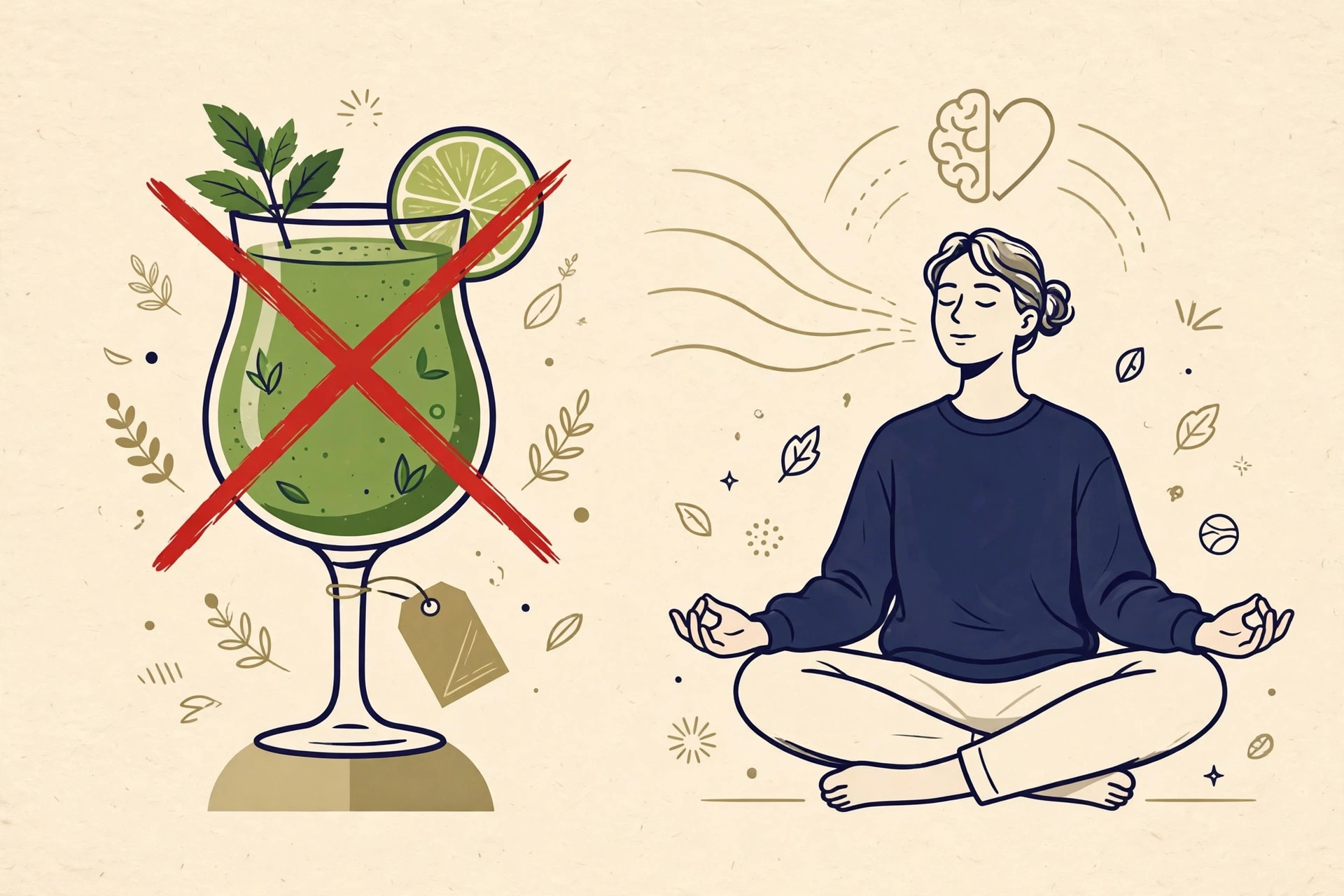
The cortisol cocktail myth
The pitch sounds scientific. Lower your cortisol, lower your stress. The drink is coconut water, sea salt, and orange juice. No study shows it lowers cortisol. No study shows it lowers anxiety. The name does the selling, not the evidence.
The other anxiety fads
Ashwagandha has a few small, short trials with mild effects. That is interesting, not proven. CBD for anxiety has weak, early evidence. Oral GABA supplements have no solid trials showing they calm anxiety. Nootropic drinks and stacks are marketing with a lab coat on. None of these come close to the evidence for real treatments.
What actually works: exposure-based CBT
Cognitive behavioral therapy, especially with exposure, has the strongest evidence for anxiety disorders. A meta-analysis of 66 studies with 6,113 people tested it in routine clinical care. The effect size was 1.09 right after treatment. It grew to 1.39 at follow-up. That means people kept improving after therapy ended. Antidepressants like SSRIs and SNRIs also work well, according to a major review.
How common is anxiety?
Between 284 and 301 million people worldwide live with an anxiety disorder. The WHO reports that 1 in 8 people lives with a mental disorder. Those numbers come from a global mental health overview. If your mind races every day, you are far from alone.
What you can do this week
Name the thing you avoid because of anxiety. Break it into the smallest possible step. Do that step. Repeat it until the fear drops. That is exposure in a nutshell. A therapist can guide you through the full version. If avoidance runs your life, book one session and ask about CBT.
This guide is general information, not medical advice. If symptoms stick around or worry you, talk to a doctor.
Questions, answered
Do cortisol cocktails lower cortisol?
No published study shows that. The name sounds scientific. The evidence behind it is zero.
What about ashwagandha?
A few small, short trials show mild effects. That is a starting point, not proof. The evidence for CBT is far stronger.
When should I see a professional?
When anxiety limits your work, relationships, or sleep. Both CBT and medication have strong evidence behind them.