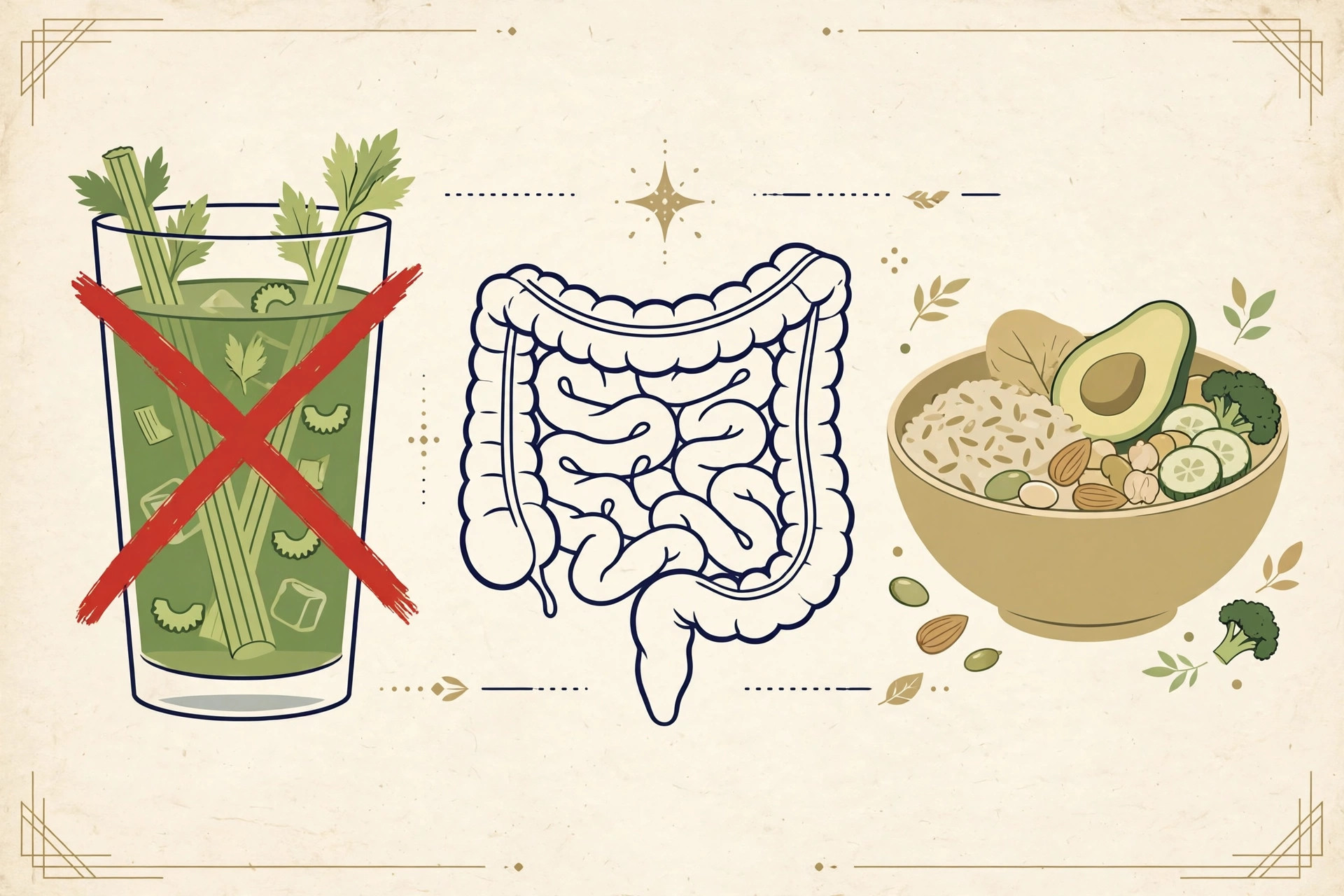
The celery juice myth
Celery juice is marketed as a cure for bloating, inflammation, and practically everything else. Celery is a vegetable. It contains water, some vitamins, and a little fiber (less once you juice it). No published study shows it treats IBS or detoxes your digestive system. Your liver and kidneys already handle detox. They do not need a green juice to do their job.
IBS is common and real. Depending on how researchers count it, it affects about 3.8% of people under strict criteria and up to 9.2% under broader ones (population study, PMC). That many sufferers make a tempting market for miracle drinks. Do not let your wallet do the healing.
Why IgG food sensitivity tests mislead you
These tests claim your blood reveals which foods to avoid. The science says otherwise. IgG antibodies mostly show which foods you have eaten, not which ones harm you. Major allergy and immunology societies advise against using IgG panels to guide elimination diets. The result is predictable: you pay for a long list of "sensitivities," you cut half your diet, and your symptoms barely move.
"Leaky gut" cure-alls and apple cider vinegar
Intestinal permeability is a real research topic. The powders and protocols sold to "seal your gut" are not backed by strong trials. Sellers invented a disease, then sold the cure. Apple cider vinegar gets similar treatment for reflux. It is an acid. Putting more acid on reflux is not a plan. It can erode tooth enamel and irritate your throat.
What actually helps: low-FODMAP, done right
A network meta-analysis of 76 randomized trials with 8,058 patients found low-FODMAP diets reduce IBS symptoms better than other dietary approaches (Frontiers in Pharmacology, 2022). That is real evidence. But the method matters. Work with a dietitian. Do the elimination phase, then do the reintroduction phase. That second step is the whole point. It tells you which foods actually bother you.
Do not stay on a restrictive diet forever. Long-term restriction can shrink the diversity of your gut microbiome and leave nutrient gaps. The diet is a diagnostic tool, not a lifestyle.
Peppermint oil beats placebo. Probiotics depend on the strain.
Peppermint oil capsules outperform placebo for IBS pain and bloating in clinical trials. It relaxes gut muscle. Use enteric-coated capsules, which survive stomach acid and release in the intestine. Talk to your pharmacist about interactions.
Probiotics are not one thing. Specific strains help specific symptoms. Generic "gut health" blends with a dozen strains at mystery doses are a gamble. Match the strain to the symptom, give it a few weeks, and judge by results.
When gut symptoms need a doctor, not a juice
Get checked promptly if you notice blood in your stool, unexplained weight loss, new symptoms after age 50, or pain that wakes you at night. Those are red flags. No diet or supplement replaces that appointment.
This guide is general information, not medical advice. If symptoms stick around or worry you, talk to a doctor.
Questions, answered
Should I try celery juice anyway?
It is safe for most people, but it will not fix IBS or detox anything. Spend that money on something with evidence behind it.
Do I need to cut gluten or dairy forever?
Only if testing or a guided elimination shows a real trigger. Permanent restriction without guidance risks nutrient gaps and a less diverse microbiome.
Are probiotics worth buying?
Sometimes. Match a specific strain to a specific symptom and give it a few weeks. Generic gut health blends are a gamble.