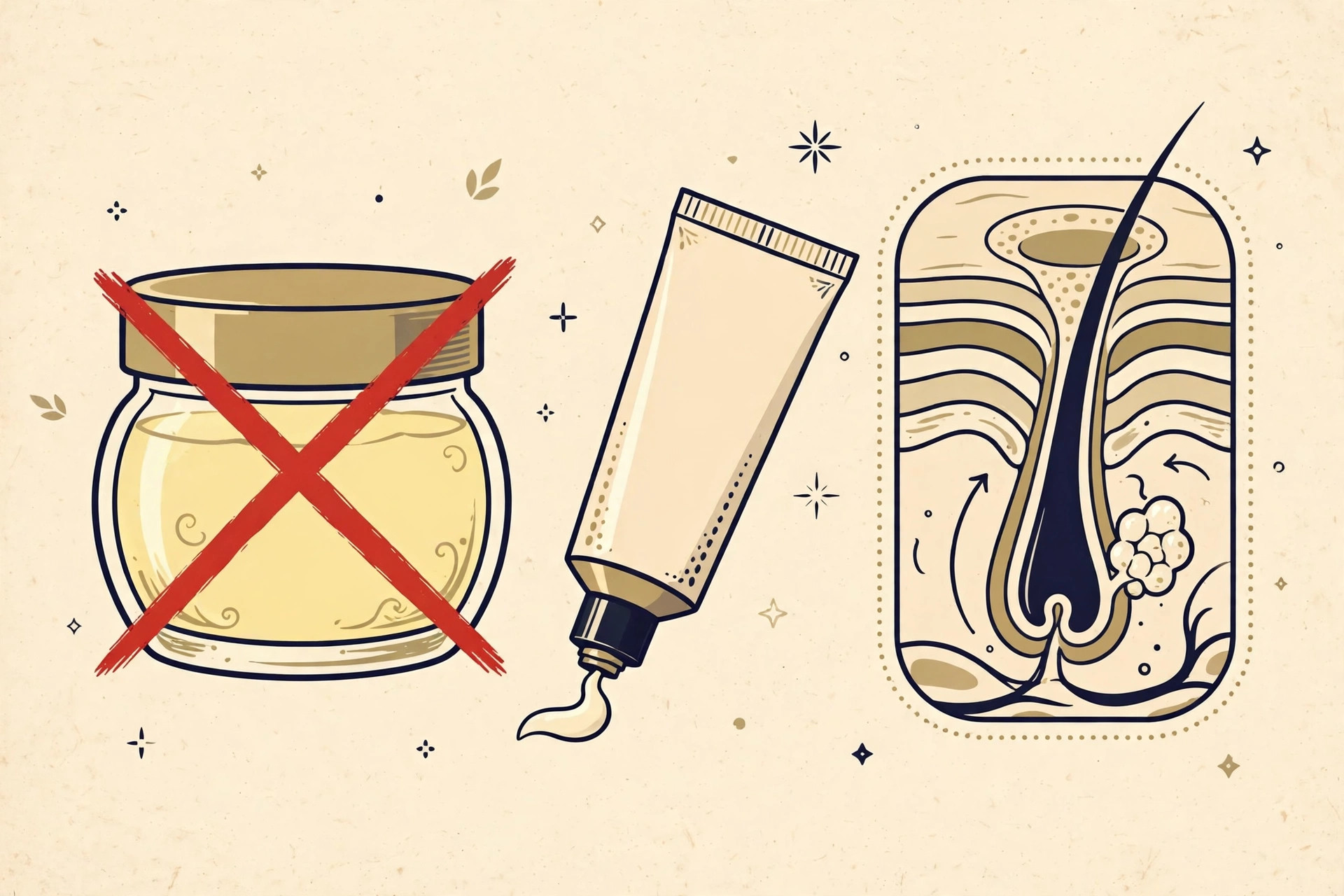
Beef tallow will not fix your face
The trend claims animal fat "matches your skin's natural oils." Your sebaceous glands already produce oil. That is half the problem with acne. Smearing rendered tallow on acne-prone skin can clog pores and trap bacteria. No clinical trial supports tallow as an acne treatment. Influencers sell it. Dermatologists do not recommend it.
Acne is one of the most common skin conditions on earth. About 240 million people had it in 2021, and it affected 9.8% of people aged 10 to 24 (American Journal of Clinical Dermatology, 2025). Roughly 85 to 90% of teenagers get it at some point (Dermatology and Therapy, 2026). A problem this common deserves real treatments, not kitchen experiments.
Toothpaste, lemon juice, and other kitchen chemistry
Toothpaste dries out pimples. It also burns and irritates the surrounding skin. Lemon juice sounds natural. In sunlight it can cause chemical burns and dark spots. Essential oils can trigger allergic reactions. These hacks trade one problem for a worse one. Your bathroom cabinet is not a pharmacy.
What dermatologists actually recommend first
Topical retinoids, benzoyl peroxide, and combinations of the two sit at the top of the evidence ladder. Retinoids unclog pores and calm inflammation. Benzoyl peroxide kills acne bacteria. Together they beat either one alone. We could not pull the full text of the 2024 American Academy of Dermatology guideline during research, but the retinoid plus benzoyl peroxide first-line recommendation is well established across dermatology sources.
Start low and go slow. Retinoids irritate at first. Use a pea-sized amount at night. Pair it with moisturizer. Give your skin weeks to adjust.
When topicals are not enough
Moderate to severe acne has heavier options. Oral antibiotics work in short courses, always paired with a topical to slow resistance. Hormonal therapy helps some women whose breakouts follow their cycle. Isotretinoin handles severe or scarring acne under close medical supervision. Each of these needs a doctor. None of them needs a cow.
What about diet, teas, and "gut-skin" probiotics?
High glycemic foods may worsen acne slightly. The evidence is modest. No food cures it. "Hormone balancing" teas have no solid trials behind them. Probiotics are not a primary acne treatment. Blue-light masks and pore vacuums have thin evidence and real risks of burns and broken capillaries. Save your money for the ingredients with trials.
This guide is general information, not medical advice. If symptoms stick around or worry you, talk to a doctor.
Questions, answered
Can I pop pimples myself?
Do not. Picking pushes bacteria deeper and raises your scarring risk. A warm compress and patience work better.
How long before a treatment works?
Give any new routine 8 to 12 weeks. Acne treatments are slow. Switching products every week guarantees failure.
Does diet cause acne?
Diet is a minor player for most people. High glycemic foods may worsen it slightly. No food cures it.